
 | ||||
THE LAY OF MOEL: The Saga of the Bear's Son: comprises five volumes of an epic heroic saga/mythology that chronicles the adventures of Caelean (Cael) Artair Faolan as he journeys to the far flung mysterious archipelago of Moel Eyris---Mole Island, or, more accurately, The Islands of the Maols.
The five books in the series are:
Book One: The Secret Book of Moolstery
Book Two: The Secret of the Mool Dykes
Book Three: The Secret of Morag's Too'er
Book Four: The Secret of the Myvyrrian Map
Book Five: The Secret of the Dragon Eggs
Each book follows Cael as he undergoes twelve long years of study to become a "maol" or "mythographer" in the islands.
Maols reside in the ancient, isolated settlement called Moolstery off the farthest tip of Moel Gearde in the archipelago. The maols belong to the ancient brotherhood called the Cymry of Maols --- The Brotherhood of Mythographers.
On this page I will introduce various elements of the narrative, concepts, ideas, characters, and sample chapters and excerpts from the books.
Welcome to the mystical and mysterious world of Moel Eyris---Islands of the Maols
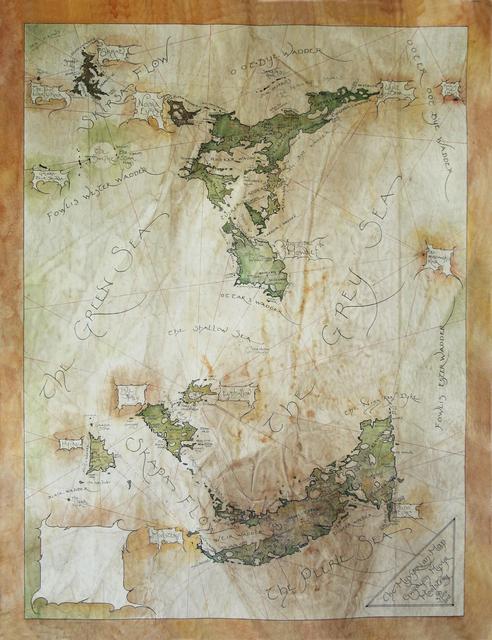
The Myvyrrian Map
This is one of the very early maps for the archipelago. As the narrative evolved I had to keep "updating" the map to ensure that the geography was always consistent with the story.
| ||||
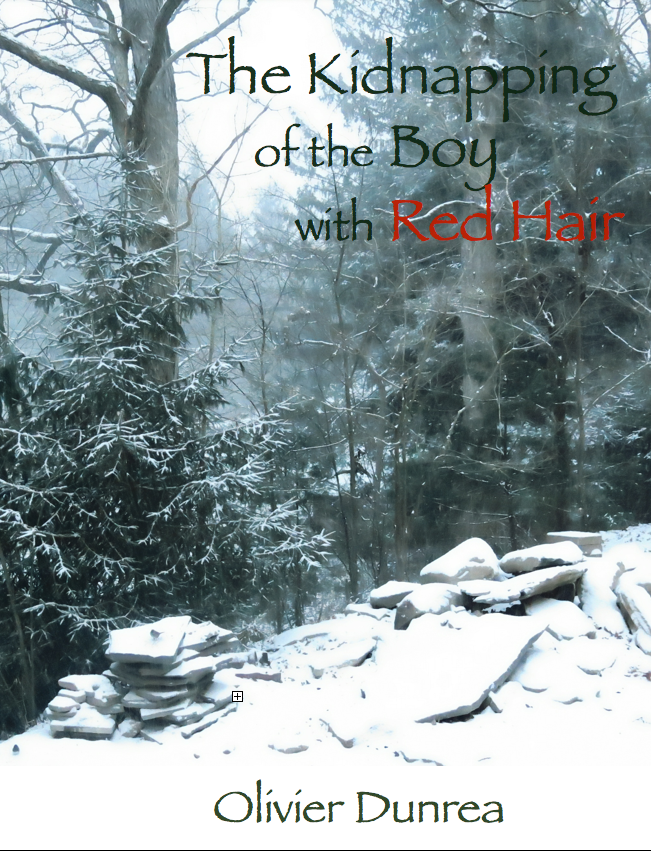
The Kidnapping of the Boy with Red Hair is the back story as to how Maol Rudha [The Red Maol (born in the Iron Age)]was originally kidnapped and brought to The Islands on the Edge.
It was the ancient Atecotti* that sent the shapeshifter, Skar Crombie, on his epic quest to find the boy with the red hair and bring him to the islands. The settlement where the boy with the red hair (his name is Roostus, son of Oother) lived with his family and clan would be wiped out by the marauding Sea Wolves and the boy with the red hair had to be found and brought to safety in order to fulfill his destiny.
*The Atecotti are the Ever-Living Ones; the Oldest Old Ones.
On a becalmed, mist-conjured day, the mysterious Atecotti wandered out of the Timeless Mists onto the rugged west coast of the northernmost island. The arrival of the Atecotti marked the beginning of The Misty Age in the history of The Islands on the Edge.
Skraelings (trows) are the descendants of the Atecotti and keep them hidden and protected from all dangers.
Text and Art Copyright Olivier Dunrea September 2007
All rights reserved. No part of this book may be reproduced or transmitted in any
form or by any means, electronic or mechanical, including photocopying or recording
or by any information storage system without permission in writing from the author.
Book and cover design by Olivier Dunrea Copyright 2007
Scene 15: In a sudden mad rush Skar Crombie bursts into the hut where Roostus and his family are sleeping. Before the
family knows what is happening, the huge bear grabs the boy with the red hair, and bounds out the the door. The boy tightly
clutches his carved wooden bear, his eyes wide with terror, but he does not cry out. The family's screams and shouts wake
the rest of the settlement. Against the frozen whiteness the villagers see a giant black bear dragging the boy out of the
settlement toward the looming snowy crags. And in that instant heavy snow begins to fall, and the pair can no longer be
seen.
The wind howls and blows the snow in swirls of blinding whiteness. The black bear and the boy quickly disappear into the
swirling snow. The men in the village quickly grab their weapons and pursue the bear and boy, their cries and shouts are torn
from their lips and stolen by the fierce, howling wind.
Scene 16: The swirling snow blurs Skar Crombie's vision. The fierce snowstorm roars in his ears. He only hears the howling
wind and nothing else. The bear does not pause to look back to see if he is pursued. He knows that he is. The boy with the
red hair struggles and beats at the bear's face with his small fists. Skar Crombie knows he cannot escape his pursuers carrying
the small boy in his mouth. The bear stops and drops the boy to the ground. He pins him to the ground with his massive
forepaws.
Skar Crombier puts his face close to the boy's face. The boy with the red hair is certain the bear is going to eat him. But,
the bear does not eat the boy. He breathes his warm bear breath into the boy's face. The bear's breath calms the boy and
makes him feel drowsy. In a matter of minutes the boy is fast asleep, still holding tight to his carved bear. This is the magic
of the bear's breath.
Scene 17: Skar Crombie stands over the sleeping boy. Slowly his bear's skin begins to change and shift iinto that of the
burly, black-bearded man. His pursuers are far behind and cannot see him in the blanket of whiteness. Skar Crombie scoops
up the boy and is able to run faster than he could in the form of a bear carrying the boy in his massive jaws.
Unable to continue in their pursuit of the bear and the boy with the red hair, Skar Crombie's pursuers slowly trudge back to
their village, defeated by the snow and by the bear. The angry, howling wind makes the men afraid. Pursuit of the giant bear
is hopeless. The boy with the red hair is lost to them. Forever.
Excerpt from the story...
Author's Note: I first began writing this story as well as drafting out the entire synopsis for The Lay of Moel Eyris in 1978 during my first visit to Scotland. It was in the far north of Scotland and the Orkney and Shetland Islands as well as the Outer Hebrides that inspired the idea. I became obsessed and fascinated with the archaeology and prehistory of Scotland. In 1986 a published a nonfiction book titled Skara Brae: The Story of a Prehistoric Village (Holiday House, New York). My primary focus on the ancient sites I visited throughout Scotland and the isles between 1978 to 1998 was the origin of folk beliefs associated with these ancient, often mysterious, structures. Words such as broch, barrow, cairn, weem, earth-house, standing stones, etc. drew me deeper and deeper into creating my own mythology. I wanted to create a world of magic that was based more authentically on ancient beliefs and rituals. As I created the geography and inhabitants of what I call The Islands on the Edge I knew that magic and faery would play a significant role in the writing of this narrative. And, of course, over the years I realized that I needed to work out the backstories for each of the main characters and islands.
So, here it is now 2026 and my fascination with these mysterious islands and characters continues unabated.
All writing and art on this website is Copyright 2026 Olivier Dunrea. All rights reserved.
